Friday, March 03, 2006

Albion

Last night we invited the crew of Albion over for dinner. The four of us had a great time.

Chris is a Brit (Limey, Englishman) and June is American. The couple has lived in many countries and speak many languages. They mentioned England, Portugal, Singapore, Thailand, Panama, and several others that I can’t remember.


Chris is a bowyer. I never met a bowyer before. I never even heard that word before. Chris makes bows and arrows including traditional English longbows. Chris’ web site is www.castanley.com. June has degrees in teaching English and in literature. Both Chris and June have taught English as a Second Language (ESL) in many countries. June has been a HAM for many years, and Chris is studying Morse code just like me. June also speaks many languages and she sounds like a very talented woman. I suspect that talent in languages carries over to learning Morse code.

We had a lot in common and we enjoyed swapping stories about being expatriates and about sailing. Too bad we’re leaving away in a few days. Perhaps we’ll meet again with Albion and our new friends in some other port. Actually, we met Albion first in Elizabeth City North Carolina, then a second time in Fernandina Beach Florida, and now for the third time in Marathon, so the chances of more meetings may be good. Posted by Picasa

Thursday, March 02, 2006

The Bicycle Rack

Marathon Harbor
3/2/2006

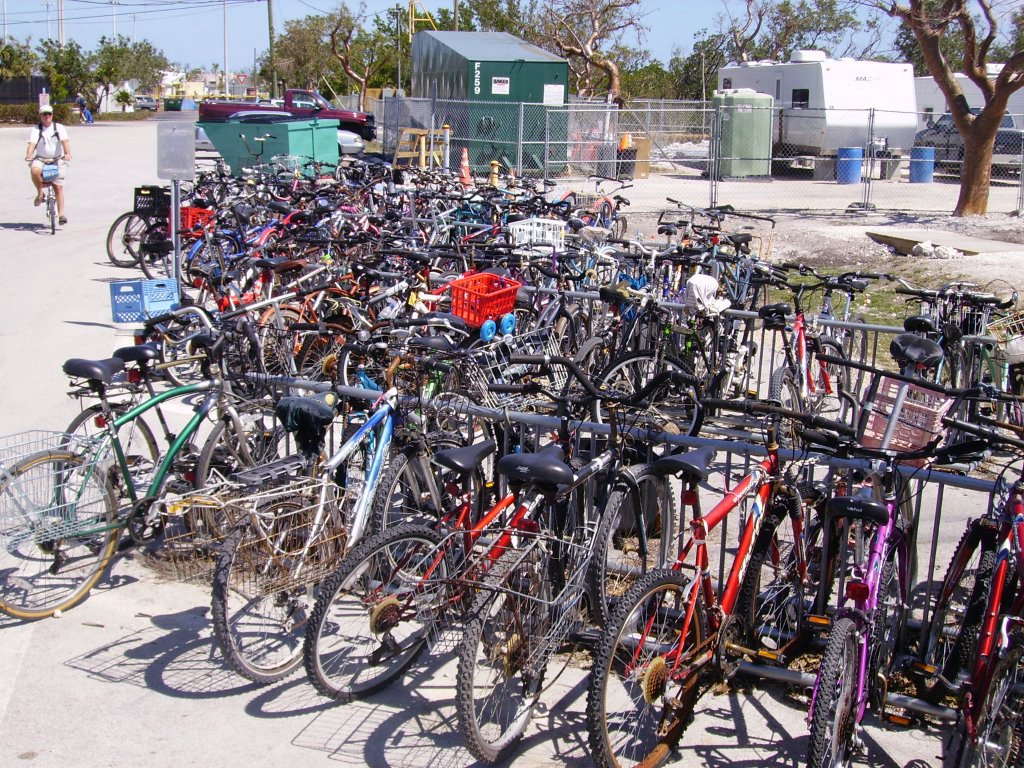
Another aspect of the cruising life is the bicycle rack. See the picture. Here is Marathon it's a terrible mess as you can see.

Posted by Picasa
Some people come here to stay several months so they buy a used bicycle to get around town while they are here. When they leave, they either sell the bike or just abandon it. The bicycle rack is filled with very old rusty bicycles that are locked to the rack. Nobody knows who owns them so they don't dare take them away. After a long time, the tires go flat, the handlebars and the seats fall off yet the bike remains locked to the rack.

The result is that abandoned bikes far outnumber the used bikes in the racks and that it is very hard to find a place for our bike.

When we leave, our bike folds up so that we can take it with us on hhe boat. I expect that wherever we go, we'll find dinghy docks and bicycle racks for the cruising sailors.

WX


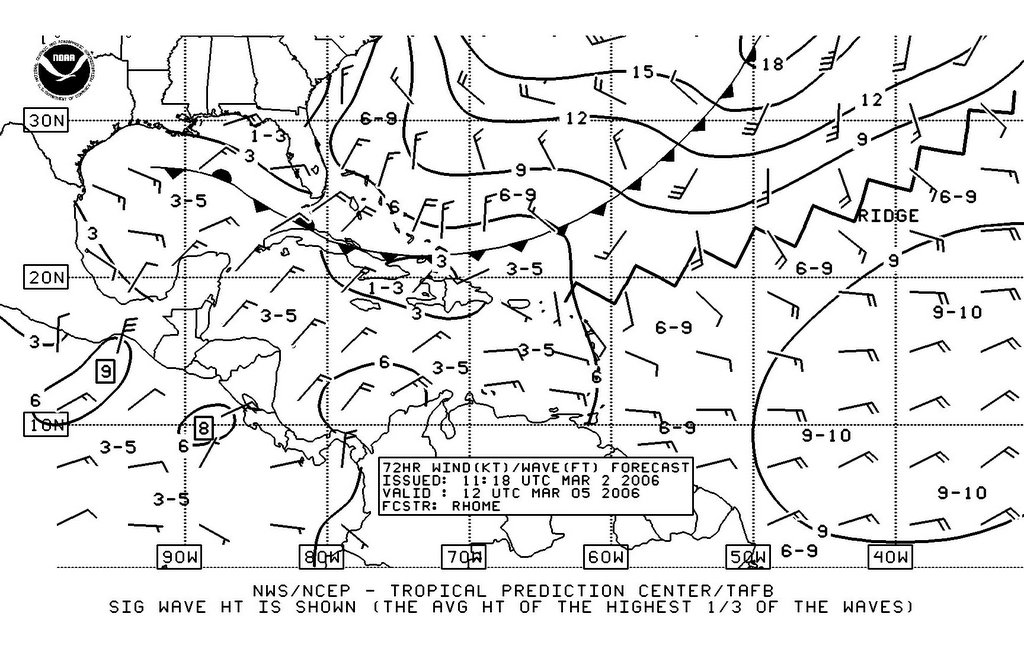
We were planning to leave on Saturday March 4. However the weather forecast shows that we might want to wait until Monday.

The experts say that we should avoid the Gulf Stream when winds blow from the north; especially when winds are 20 knots or more. The best time to go is immediately after one of the "Norther" fronts that pass through the gulf.

The forecast in the picture shows a Norther passing through on Sunday, so I tentatively plan to delay departure until the front passes. Posted by Picasa

Wednesday, March 01, 2006

Drew and Kia

Marathon Harbor


We had Drew and Kia over for dinner tonight. You remember them. We wrote about them in our blog early in January. They were the couple who own a Westsail 28 and who sailed a Clipper 26 from Ketchikan Alaska down to Seattle. Now they bought a Westsail 28 named ‘aleluia and they’re living onboard with their dog Creosote.

Also last January, I took Kia for a ride around the harbor with the sail up on our dinghy, and we got dunked in the water. (See the blogs from January 6 and 7)

We had Drew and Kia over for dinner tonight. You remember them. We wrote about them in our blog early in January. They were the couple who own a Westsail 28 and who sailed a Clipper 26 from Ketchikan Alaska down to Seattle. Now they bought a Westsail 28 named ‘aleluia and they’re living onboard with their dog Creosote.

A lot happened to Drew and Kia since January. Their engine died. They only had the boat less than a month and they only sailed as far as from Homestead Florida to Marathon. Still, the motor got water in the oil and it was ruined. Now they are both working jobs here in Marathon partially to make enough money to get a new engine and get out of here.

Drew and Kia also got married here in Marathon a few weeks ago. It’s nice to see young people who still care about thinks like that.

After leaving Marathon, Drew and Kia plan to sail up to Maine for the summer. They like that idea better than working the cannery in Ketchikan. From what I understand about canneries, I think they’re right.


Kia is checking out the pictures of our Clipper 26 sailboat on my laptop. They also owned a Clipper 26. Quite a conincidence. Posted by Picasa

The Dinghy Dock

Marathon Harbor
N 24 42W 81 05

If you’ve never lived the cruising life, then you missed the social phenomenon of the dinghy dock. You see most big boats, like Tarwathie, can't sail up to shore. The water is too shallow there. We have to anchor off shore our out in the harbor somewhere. When we visited my brother Ed in Palm Bay, we coudn't get Tarwathie any closer than a half mile to shore. That's too far to swim.

The way we and other cruisers get to shore is with our dinghy. A dinghy is a small boat that we carry with us wherever we go. Tarwathie carries our dinghy up high on the deck when we sail. When we want to use it we have to lower it into the water. With the dinghy, we can row to shore.

The picture shows the dinghy dock at the Marathon City Marina. It looks crowded but on some days there are three times as many dinghies there. This marina, and other places charge money for permits to park your dinghy at the dock. Sometimes they get more money from that than for any other service for the boaters. In Marathon we had to pay $65 per month to use the dinghy dock.
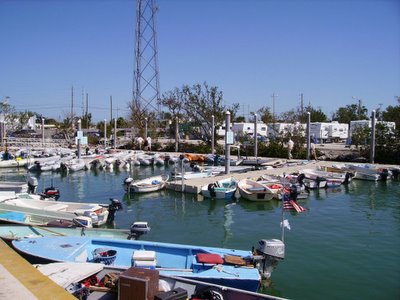


When it is very crowded you have to double park or triple park your dinghy. When you do that you have to crawl over all the boats between you and the shore. Since many of them tend to be tippy and many have water on the floor, that’s an adventurous process. You risk dropping what you’re carrying or soiling your clothes, or worst case, of falling in the water.

When your boat is on the inside with other boats double or triple parked behind you, it’s a challenge to get out. You have to untie the painters on those other boats and move them out of your way. Then you need to reposition them and retie them. Boaters often do a bad job of retying and they drift away.

It would also be bad to have a brand new shiny dingy (or dink as sailors like to call them) because they get all banged up at the dinghy dock. It’s almost impossible to bring your boat in without smashing into others.

When people go away, like we went away for David’s graduation, they leave their dinghies at the dock. If there is a big rainstorm while they are gone their dinghy fills with water and sinks. Then one finds out just how nice or nasty the fellow boaters are. If they’re nice they will bail your dinghy so it doesn’t sink. If they’re nasty they just run over your sunken boat.

As you can see, dinks come in two varieties, soft (inflatable) and hard. Most have outboard motors but some (like ours) just have oars. A soft dinghy is almost impossible to row properly but they are very stable and almost immune to tipping. They also don’t scratch your sailboat if they run into the side. However, a lot of the soft dinks leak air, and you see the owners blowing them up to keep them from sinking.

Sometimes the police boats stop the dinghies and check them for required equipment: life jackets, horns, flares, lights (at night) and registration if they have a motor. Since many cruisers don’t have those things they get expensive tickets to pay.

The most amazing variety in dinks is the size. The cruisers in the harbor are more-or-less the same size, mostly 30-45 feet long, but the dinghies they bring to shore vary from 4 feet long to 20 feet long. I even saw one that was eight feet wide. I think some of these dinks are much too big to bring onboard your sailboat or to tow behind you. I suspect that people buy it locally then sell it to someone else when they leave.

The part I like best is to see the owner’s dogs riding to shore in the dinghy. Many of these poor dogs only get to go ashore and visit a fire hydrant once per day. When they do come they are very eager. You see them with their front feet up on the boat anticipating arrival. I can almost hear the thoughts in their heads, “I’m going ashore. I’m going ashore. Oh boy. Oh boy. I’m going ashore.” Once I even saw a cat doing the same thing. He was sitting precariously on the rail, seemingly fearless of falling in the water. That looked very un-cat-like, but otherwise, he was a perfect picture of dignity. Someday I’d like to make a video collection of these animals riding the dinks and submit it for the America’s Favorite Home Videos TV program. Posted by Picasa